In recent years, CGI advancements have dramatically reshaped the landscape of cinema, allowing creators to bring their wildest imagination to life on the big screen.
From lifelike characters to breathtaking environments, the evolution of Computer-Generated Imagery (CGI) has not only enhanced storytelling in films but also found applications across various industries, including gaming, advertising, and virtual reality.
As technology continues to progress, it presents exciting possibilities and unique challenges that filmmakers and other professionals must navigate.
In this article, we'll delve into the latest CGI advancements, explore their impact on cinema and beyond, and speculate on what the future may hold for this groundbreaking technology.
The BEST AI Screenwriting Tool In Hollywood!
Key Takeaways
- CGI has revolutionized the visual storytelling aspects of cinema.
- Recent advancements in CGI technology enable unprecedented realism in film production.
- Beyond cinema, CGI is being utilized in fields like gaming, medicine, and education.
- Despite its benefits, CGI faces challenges including overuse and skepticism from audiences.
- The future of CGI promises even more innovation, potentially reshaping the boundaries of creativity in various industries.
Introduction to CGI and Its Impact on Cinema
Computer-Generated Imagery (CGI) has transformed the landscape of cinema over the past few decades, revolutionizing the way filmmakers bring their creative visions to life.
As CGI advancements continue to push the boundaries of visual effects, we see a significant impact on storytelling and audience engagement.
The incorporation of CGI allows for the creation of breathtaking environments, lifelike characters, and extraordinary action sequences that would be impossible to achieve with traditional methods.
From the early days of digital effects to today’s hyper-realistic animations, the evolution of CGI has fundamentally changed not only the aesthetic of films but also the audience's expectations.
This introduction to CGI highlights its critical role in modern cinema, showcasing how these technological leaps have enabled filmmakers to explore more ambitious narratives and engage viewers in unprecedented ways.
Recent Technological Innovations in CGI
Recent technological innovations in CGI have transformed the landscape of visual storytelling, enabling creators to craft more immersive and realistic experiences than ever before.
The integration of machine learning and artificial intelligence in CGI advancements has streamlined workflows, making it easier to generate complex animations and lifelike characters.
Moreover, tools such as real-time rendering engines allow artists to visualize their work instantaneously, significantly reducing production times while enhancing creative possibilities.
Projects like virtual reality experiences and interactive video games leverage these CGI advancements, pushing the boundaries of how audiences engage with digital content.
As technology continues to evolve, we can expect even greater strides in CGI, ultimately reshaping the future of film, gaming, and beyond.
'The greatest advances of humanity come not from using technology, but from discovering how to use our creativity to shape it.' - A. G. BellThe BEST AI Screenwriting Tool In Hollywood!
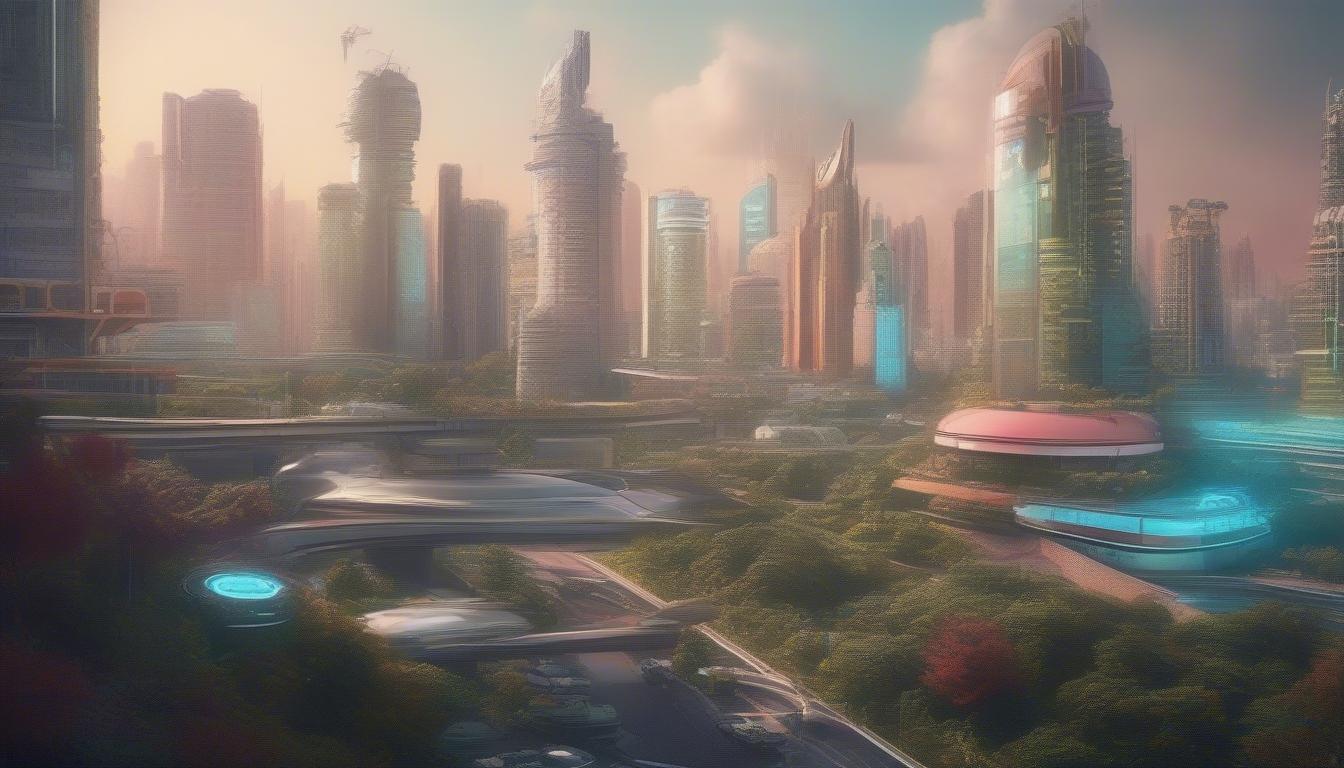
Applications of CGI Advancements in Other Industries
CGI advancements have transcended beyond their traditional use in film and entertainment, making significant inroads into various industries that benefit from enhanced visual representation.
In the world of architecture, for instance, architects and developers utilize CGI to create immersive and photorealistic virtual models of buildings, allowing clients to visualize final structures even before construction begins.
This technology not only aids in presenting innovative designs but also facilitates effective modifications based on client feedback.
Similarly, the automotive industry has harnessed CGI advancements to design and showcase vehicles.
Manufacturers can develop high-quality visualizations that highlight features and demonstrate performance, engaging potential buyers in dynamic ways that traditional methods cannot.
Moreover, the gaming industry relies heavily on CGI to create realistic environments and characters, continuously pushing the boundaries of what is visually possible.
This has particularly accelerated with the use of virtual reality, where players can immerse themselves fully in 3D worlds.
Healthcare is another beneficiary of CGI advancements, utilizing 3D modeling for creating detailed anatomical visuals that assist in surgical planning and education.
These applications illustrate the far-reaching impact of CGI advancements across sectors, enhancing creativity and functionality while driving innovation in the market.
Challenges and Criticisms of Modern CGI Techniques
As CGI advancements continue to evolve at an unprecedented pace, they bring both remarkable innovations and significant challenges to the film and gaming industries.
One of the primary criticisms centers around the over-reliance on CGI, which can detract from storytelling and character development.
When filmmakers prioritize visual effects over compelling narratives, audiences may find themselves disengaged, even when the graphics are stunning.
Additionally, the use of CGI advancements can lead to a homogenization of visual style where many films begin to look and feel the same.
This is compounded by the cost and time involved in creating high-quality CGI, which can stretch budgets and timelines—sometimes at the expense of other critical production elements.
Critiques also arise regarding the representation of human emotions; while CGI can create lifelike characters, it often struggles to replicate the subtlety of human expressions, leaving actors feeling overshadowed by their digital counterparts.
As technology progresses, the industry must balance the awe-inspiring capabilities of CGI with the fundamental principles of good storytelling to ensure that the art of cinema is not lost in a sea of pixelated imagery.

The Future of CGI: What’s Next for Filmmaking and Beyond?
As technology evolves, the future of CGI advancements holds extraordinary potential for filmmaking and beyond.
With the convergence of artificial intelligence, machine learning, and rendering technology, filmmakers are now able to create hyper-realistic visual effects that push the boundaries of imagination.
Innovations such as real-time rendering allow for breathtaking visuals to be generated on-the-fly, offering directors unprecedented creative control during production.
Furthermore, the integration of virtual reality (VR) and augmented reality (AR) opens new avenues for immersive storytelling, allowing audiences to engage with narratives in ways previously thought impossible.
As CGI continues to advance, we can expect not only stunning visual experiences in cinema but also its application in gaming, advertising, and even education.
This evolution will challenge traditional narratives and redefine the viewer experience, making CGI an integral part of our cultural and technological landscape.
Comments
Post a Comment